
What is a Closing Disclosure?

What is a Closing Disclosure in a real estate transaction?
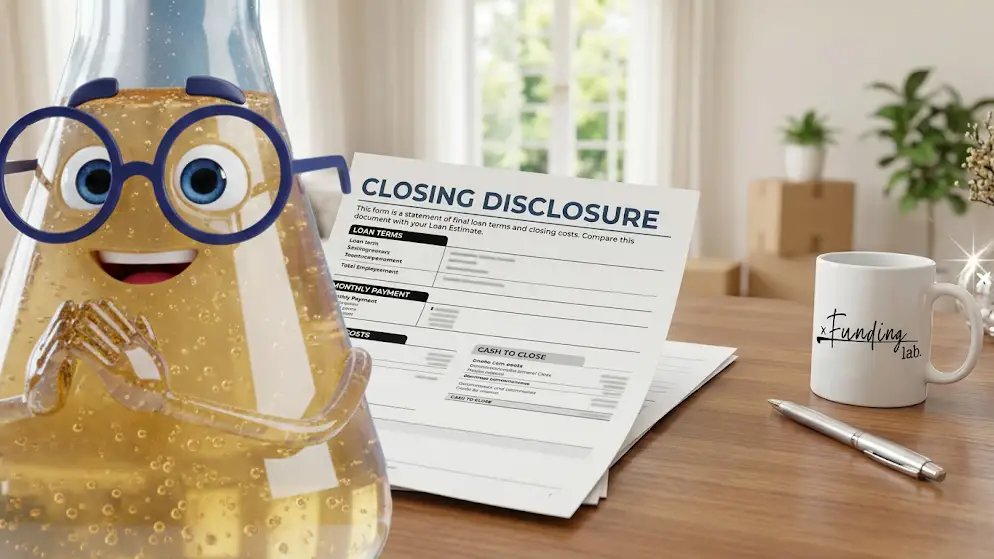
A Closing Disclosure is a formal five-page legal document that acts as your final mortgage “invoice.” It summarizes four critical data points: your final interest rate, monthly PITI payment, total closing costs, and the exact “Cash to Close” amount required at the signing table.
Beyond the Finish Line
You have spent weeks submitting pay stubs, bank statements, and P&L reports. Finally, your loan officer says those magic words: “You are clear to close.” However, before you can grab the keys, one final gatekeeper remains.
Specifically, the Closing Disclosure (CD) acts as the definitive roadmap for your financial future. This is not just another pile of paperwork to sign. Consequently, it represents the legal binding truth of your mortgage. If the Loan Estimate was a weather forecast, the CD is the actual rainfall. Understanding this document ensures you avoid expensive surprises at the settlement table. At The Funding Lab, we believe an educated borrower is a protected borrower. Let’s decode the final five pages of your home-buying journey together.
When exactly do I get my Closing Disclosure?
You must receive your CD at least three business days before you sign your final loan documents. Federal law mandates this “Three-Day Rule” to protect you from being rushed. Specifically, the clock starts once you acknowledge receipt of the document. Therefore, if you receive it on Monday, you generally cannot close until Thursday. This period allows you to consult with your attorney or financial advisor.
How does the Loan Estimate compare to the Closing Disclosure?
Think of the Loan Estimate as a professional quote and the CD as the final bill. While your lender aims for accuracy early on, third-party costs often shift during the process. However, the law limits how much certain fees can change. Consequently, you should place both documents side-by-side to verify every line item.
Example Fee Comparison
| Fee Description | Loan Estimate (Initial) | Closing Disclosure (Final) | Status |
| Origination Fee | $1,500 | $1,500 | Match (Zero Tolerance) |
| Appraisal Fee | $500 | $540 | Acceptable (<10% Change) |
| Homeowners Insurance | $1,200 | $1,450 | No Limit (Third Party) |
Free TRID Tolerance Checker: Is Your Lender Within the Law?
Lenders must follow strict “Tolerance” rules under the TILA-RESPA Integrated Disclosure (TRID) act. Use this checker to see if your final costs are legally acceptable.

| Fee Category | Tolerance Level | What it Means for You |
| Lender Fees | Zero Tolerance | Origination charges and “points” cannot increase. The lender pays any overage. |
| Required Services (Lender-Chosen) | 10% Cumulative | Combined totals for title and recording fees cannot rise more than 10%. |
| Services You Shopped For | No Limit | If you picked your own provider, the lender is not responsible for price hikes. |
| Pre-paid Items & Escrows | No Limit | Taxes and daily interest fluctuate based on your specific closing date. |
Solution Sam’s Closing Strategy
In my experience, many borrowers focus solely on the interest rate while ignoring the Cash to Close. Listen closely: your down payment is just one piece of the puzzle. Imagine you are buying a car. The sticker price is the down payment, but the taxes and registration are your closing costs.
Specifically, “Cash to Close” includes your down payment plus all administrative fees, minus any credits. Sometimes, you might even see a “Lender Credit” which acts as a coupon to lower your out-of-pocket costs. Additionally, watch out for Pre-paids. These are payments for homeowners insurance and property taxes that go into your Escrow account.
Solution Sam Pro-Tip
Always check page 3 of the CD first. Look at the “Calculating Cash to Close” table. Specifically, look for the “Did this change?” column. If you see a “Yes,” ask your lender for a detailed explanation immediately. Don’t wait until the signing table to ask questions.
The Closing Breakdown
Step-by-Step: The Final Countdown to Closing
- Acknowledge the CD
Sign the receipt as soon as it arrives in your inbox. Note: This only indicates that you have received the document. You will do the actual signing of the document as a final step.
- Review the Math
Compare your CD to your most recent Loan Estimate.
- Verify the Entities
Confirm that your Title Company, Homeowners Insurance, and Escrow amounts are accurate.
- Secure Your Funds
Arrange for a wire transfer or cashier’s check for the exact “Cash to Close” amount.
- Final Walkthrough
Visit the property one last time to ensure its condition has not changed.
- The Signing
Meet with the notary to sign the final Promissory Note and Deed of Trust.
Frequently Asked Questions (FAQ)
Notify your lender immediately if you spot an error. Some small typos only require a corrected document at signing. However, significant changes to the interest rate or loan product will restart your three-day waiting period. Always double-check the spelling of your name and the property address.
Typically, the principal and interest stay fixed if you have a fixed-rate loan. However, your total payment might shift if your insurance premiums or property tax estimates were updated. The CD provides the most accurate PITI (Principal, Interest, Taxes, and Insurance) calculation available.
Your “Cash to Close” adds your down payment to settlement charges like title insurance and government recording fees. Additionally, it includes “Pre-paid” items like your first year of homeowners insurance. These costs ensure the loan is fully secured and the home is protected.
Technically, yes, but only for a “bona fide personal financial emergency.”1 The most common legal example is a homeowner using a fast refinance to stop an imminent foreclosure sale that would occur before the 3-day clock expires. In practice, lenders almost never allow waivers for standard home purchases because the legal bar for an “emergency” is incredibly high. Most borrowers benefit from having the full 72 hours to ensure their final numbers are correct.